
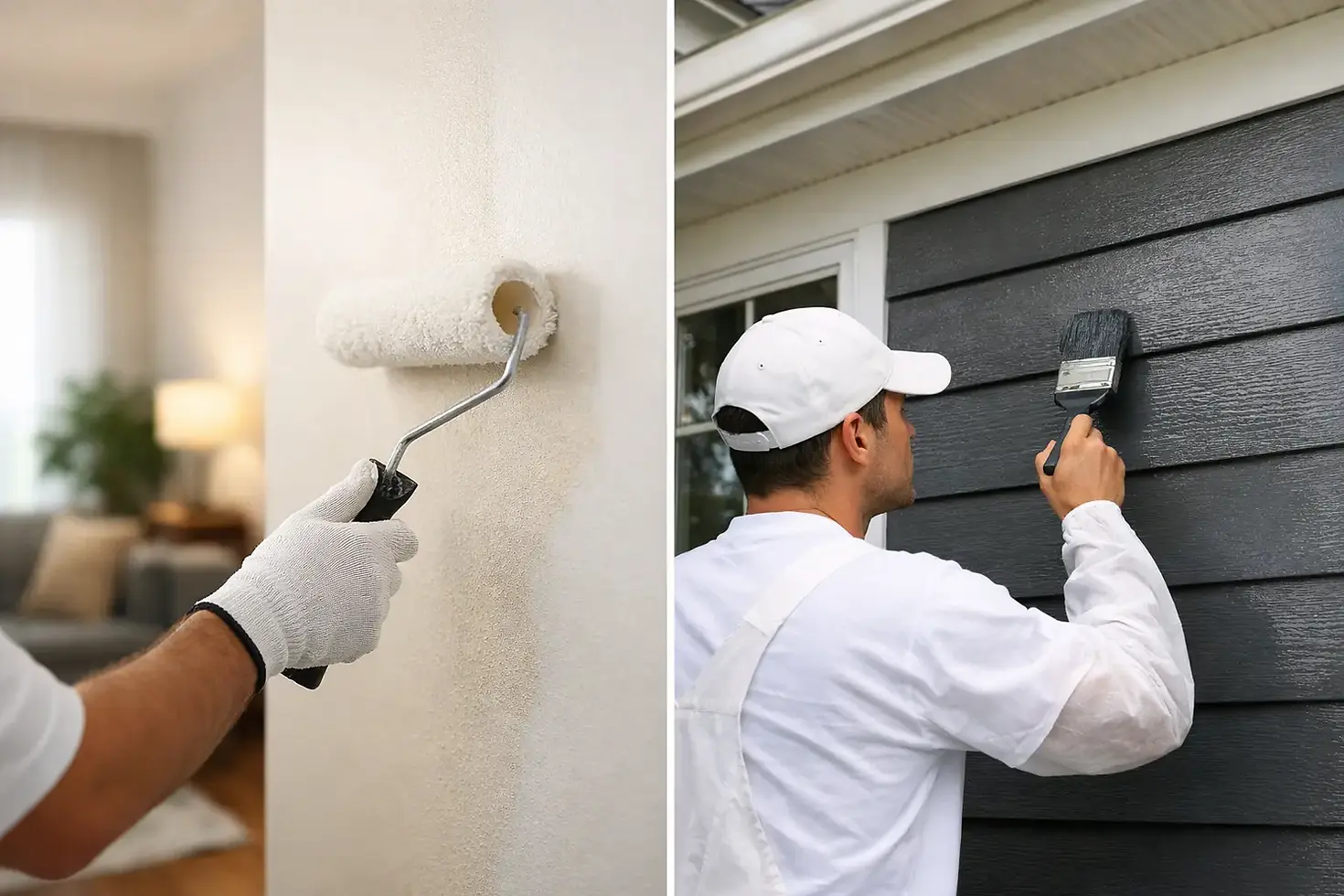
Interior vs Exterior Paint Explained

A tin might say paint, but that does not mean it belongs on every surface around your property. When clients ask about interior vs exterior paint, they are usually trying to work out whether the difference is marketing or something that genuinely affects the finish, durability and maintenance. The short answer is simple: they are made for different conditions, and using the wrong one can lead to disappointing results.
For Melbourne homes and commercial properties, that difference matters even more. Interior walls deal with scuffs, cleaning and day-to-day wear. Exterior surfaces face sun, rain, temperature swings, moisture and movement in the substrate. A good paint system needs to match the environment it is being asked to handle.
Interior vs exterior paint: what actually changes?
The biggest difference is in the formulation. Interior paint is designed for appearance, washability and low odour in enclosed spaces. Exterior paint is designed to cope with weather exposure, UV light and expansion and contraction caused by changing temperatures.
That affects how each product behaves once it is applied. Interior paints are generally made to resist marks, allow easier cleaning and maintain a consistent finish under artificial and natural light. Exterior paints are usually built with more flexible resins and additives that help them hold on to surfaces despite harsh outdoor conditions.
This is why exterior paint often feels tougher in one sense, but not necessarily better for indoor use. It is solving a different problem. Likewise, interior paint may look excellent on plasterboard, timber trims or ceilings, but it is not built to stand up to direct rain, strong UV exposure or moisture cycling outside.
Why interior paint works better indoors
Inside a home, office or retail space, people care about finish quality just as much as durability. Walls and ceilings need to look even, trim needs a neat line and surfaces need to be practical to live or work around.
Interior paint is made with this in mind. It is often lower in volatile compounds than exterior products, which makes it better suited to occupied spaces. That matters in bedrooms, living areas, offices, hospitality venues and anywhere ventilation may be limited during the painting process.
It is also designed for routine cleaning. In hallways, kitchens, waiting rooms and busy commercial interiors, marks happen. Better interior paint systems can be wiped down without losing colour or sheen too quickly. That does not mean every interior product is highly washable - the finish you choose still matters - but the category itself is built around indoor performance.
Another practical point is appearance. Interior paints usually offer more refined finish options for ceilings, walls, doors and trims. Flat, low sheen, semi gloss and gloss each serve a purpose, and a professional painter will select them according to traffic levels, light conditions and the style of the space.
Why exterior paint is different
Outside, paint is part finish and part protection system. It is there to improve presentation, but it also plays a serious role in defending the substrate underneath.
Exterior paint needs to handle far more movement than most people realise. Timber swells and contracts, masonry absorbs and releases moisture, metal reacts to exposure and previously painted surfaces can deteriorate unevenly over time. Exterior coatings are designed with flexibility and adhesion in mind so they can move with the surface rather than crack too quickly.
UV resistance is another major factor. Strong sunlight breaks down many finishes over time, leading to fading, chalking and loss of film strength. Exterior formulations are built to resist this better than interior products.
In a city like Melbourne, where conditions can change quickly, that protection is not optional. A surface might cop full sun one day and cold, damp weather the next. Exterior paint has to keep performing through all of it.
Can you use exterior paint inside?
Technically, you can apply exterior paint indoors, but that does not make it a good idea. Exterior products are not usually intended for enclosed living or working spaces, especially where odour, ventilation and indoor air quality matter.
They can also produce a finish that is less suited to interior walls and ceilings. Some exterior coatings cure in a way that prioritises weather resistance over the smoother, more refined appearance most people want inside.
In practical terms, using exterior paint indoors is rarely the right move for occupied properties. If the goal is a quality finish with minimal disruption, the better approach is to choose an interior product designed for the room and substrate.
Can you use interior paint outside?
This is where problems happen quickly. Interior paint generally should not be used outdoors. It may look acceptable at first, but once exposed to rain, sun and fluctuating temperatures, it tends to fail much sooner.
That failure can show up as peeling, blistering, fading or premature breakdown of the coating film. On masonry or timber, it may also leave the underlying surface more vulnerable to moisture-related damage.
There are a few sheltered or semi-protected areas where owners assume interior paint will do the job, such as covered alfresco zones or enclosed external entry spaces. Sometimes these areas still experience enough humidity, temperature movement or indirect weather exposure to require an exterior-grade coating. This is where site-specific advice matters.
The role of prep in both systems
People often focus on the paint itself, but prep work is what gives either system a fair chance of lasting. Whether the job is internal or external, the surface needs to be clean, sound and properly prepared for the coating selected.
Inside, that might involve patching, sanding, gap filling, stain blocking and priming repaired areas so the final finish looks uniform. Outside, prep can be more involved. Washing down surfaces, removing flaking paint, treating bare timber, addressing minor substrate repairs and applying the right primer are all critical steps.
This is one reason professional results tend to last longer. The paint is important, but the system as a whole matters more. Premium brands such as Dulux, Wattyl and Taubmans perform best when matched with the correct prep and application process.
Interior vs exterior paint for common surfaces
Not every wall or trim piece is straightforward. Different surfaces need different systems, and the interior or exterior category is only part of the decision.
Plasterboard and set plaster generally call for interior products with the right level of washability and sheen control. Timber skirtings, doors and architraves often need a tougher interior enamel or water-based trim finish that can handle knocks and cleaning. Exterior weatherboards need flexibility and weather resistance. Render and masonry need breathable, durable coatings that suit the porosity and exposure of the surface. Metal usually requires specific primers and topcoats to prevent adhesion issues and corrosion.
This is why a one-size-fits-all approach rarely works. A good painter is not just choosing a colour. They are choosing a coating system that fits the material, location and expected wear.
Finish matters as much as product type
When people compare interior vs exterior paint, they sometimes assume the decision ends at the label. It does not. Finish selection still matters.
For interiors, lower-sheen finishes are often used on ceilings and standard living area walls because they soften surface imperfections. Higher-sheen products are more common on trims, doors and heavy-use areas where easier cleaning is needed. In commercial spaces, the right balance between presentation and durability becomes especially important.
For exteriors, sheen affects both appearance and maintenance. Some finishes highlight substrate imperfections more than others. Some hold dirt differently. The right choice depends on the building style, substrate condition and how exposed the area is.
What property owners should keep in mind
If you are repainting a home, apartment, office or retail space, the safest assumption is that interior and exterior paints are not interchangeable. They may share a brand name or colour range, but they are designed to perform in different environments.
The better question is not which paint is stronger. It is which paint system is right for the surface, the exposure and the way the property is used. A hallway in a family home has different demands from a coastal exterior wall. A hospitality venue has different wear patterns from a bedroom. The right specification takes those details into account.
That is where experience makes a real difference. A dependable painting team will look at the condition of the substrate, the amount of traffic or weather exposure, the desired finish and the practical needs of the people using the space. From there, the recommendation becomes much clearer.
Choosing the right paint is really about protecting the finish you want and the property underneath it. Get that part right, and everything that follows tends to work better.


