Decorative Finishes for Walls That Last
- Painting and Decorating Experts

- Jul 3
- 6 min read
A flat painted wall can look clean and tidy, but it rarely becomes the part of the room people remember. Decorative finishes for walls give a space texture, depth and character in a way standard paint alone often cannot. The key is choosing a finish that suits the room, the lighting, the surface underneath and the level of wear that wall will need to handle.
For homeowners and commercial property managers, that decision is not just about style. It is also about durability, maintenance and how well the finish fits the building itself. In older Melbourne homes, for example, wall condition can vary significantly from one room to the next. In offices, retail spaces and hospitality venues, presentation matters, but so does keeping surfaces practical and easy to maintain.
Why decorative wall finishes work so well
A well-chosen decorative finish changes how a room feels without needing major building work. It can soften a stark space, add warmth to a modern interior, or create a focal point where plain paint would look flat. In commercial settings, it can also help reinforce brand image and create a more polished customer experience.
What makes decorative finishes different is that they work with light as much as colour. Texture, movement and layered effects can make a wall appear richer and more refined throughout the day. That is particularly useful in rooms with natural light, feature lighting or large open-plan layouts where plain surfaces can feel empty.
That said, more detail is not always better. Some finishes suit a subtle, restrained look, while others are designed to stand out. The right result depends on the room and on how the space is used every day.
Decorative finishes for walls: the main options
There is no single "best" finish for every property. A finish that looks excellent in a formal dining room may not be ideal in a busy hallway or a café fit-out. The main categories each offer different strengths.
Venetian plaster and polished plaster
These finishes are known for depth, movement and a refined, stone-like appearance. They can range from soft and understated through to highly polished surfaces with a dramatic sheen. In the right interior, they add a level of sophistication that standard coatings simply cannot replicate.
They tend to work best on feature walls, entrance areas, formal living zones and premium commercial interiors. Surface preparation is critical, because imperfections underneath will affect the final result. They also require an experienced hand. A poor application can look patchy or overworked rather than elegant.
For clients who want a luxury look, polished plaster is often a strong choice. For practical high-contact areas, it depends on the exact product and sealer used.
Textured finishes
Textured coatings can create anything from a fine suede effect to a more pronounced, tactile surface. They are useful where a wall needs visual interest or where minor substrate imperfections need to be managed more effectively than with flat paint.
These finishes are often selected for feature walls in living rooms, bedrooms, reception areas and retail spaces. They can add warmth to minimalist interiors and help larger rooms feel less stark. The trade-off is that heavier textures may collect dust more readily and can be more difficult to patch invisibly if damaged later.
Limewash and washed effects
Limewash-style finishes have become popular because they feel soft, natural and relaxed. Instead of looking perfectly uniform, they have gentle tonal variation that gives walls a lived-in quality. They suit contemporary homes, coastal-inspired interiors and spaces where a calm, organic feel is the goal.
These finishes are particularly effective in bedrooms, sitting rooms and boutique commercial spaces. They are less suited to clients who want a crisp, highly controlled appearance. The beauty of limewash is in its variation, so it helps to be comfortable with a finish that looks intentionally imperfect.
Metallic and pearlescent effects
Metallic finishes reflect light and can create a more dramatic statement. Used well, they bring energy and sophistication to a wall. Used too broadly, they can feel overpowering.
This type of finish often works best in moderation - a feature wall, a niche, a lobby wall or a section within a hospitality venue. It can be very effective in darker interiors where artificial lighting is part of the overall design. In family homes, it is usually better as an accent rather than across every wall in a room.
Concrete-look and industrial finishes
Concrete-style finishes are popular in modern homes, apartments and commercial interiors. They offer a clean, architectural appearance without the weight and construction demands of actual concrete surfaces.
These finishes suit minimalist spaces, offices, retail fit-outs and contemporary renovations. They pair well with timber, black fixtures and neutral palettes. The result can look excellent, but balance matters. If every surrounding surface is also hard and cool, the room can feel austere rather than inviting.
Choosing the right finish for each room
This is where experience matters. A decorative finish should not be chosen from a sample board alone. Lighting, wall condition, scale and room use all affect the end result.
In living areas, bedrooms and entry halls, decorative finishes often perform best as a feature rather than a whole-room treatment. This keeps the space balanced and avoids visual fatigue. In powder rooms or boutique commercial spaces, a more immersive finish can work because the room is smaller and the design intent is stronger.
For offices and high-traffic commercial interiors, durability becomes a bigger part of the decision. A beautiful finish still needs to stand up to day-to-day use, cleaning and contact. In these spaces, the smartest choice is often a finish that gives visual interest while remaining practical to maintain.
In older homes, the substrate needs close attention. Cracks, previous repairs and uneven surfaces can all affect decorative work. Sometimes the desired finish is possible with proper preparation. Sometimes a different finish will deliver a better long-term result.
Surface preparation matters more than most people expect
The final appearance of decorative finishes for walls is only as good as the surface beneath them. Even premium products will not hide poor preparation, and some speciality finishes actually make flaws more noticeable.
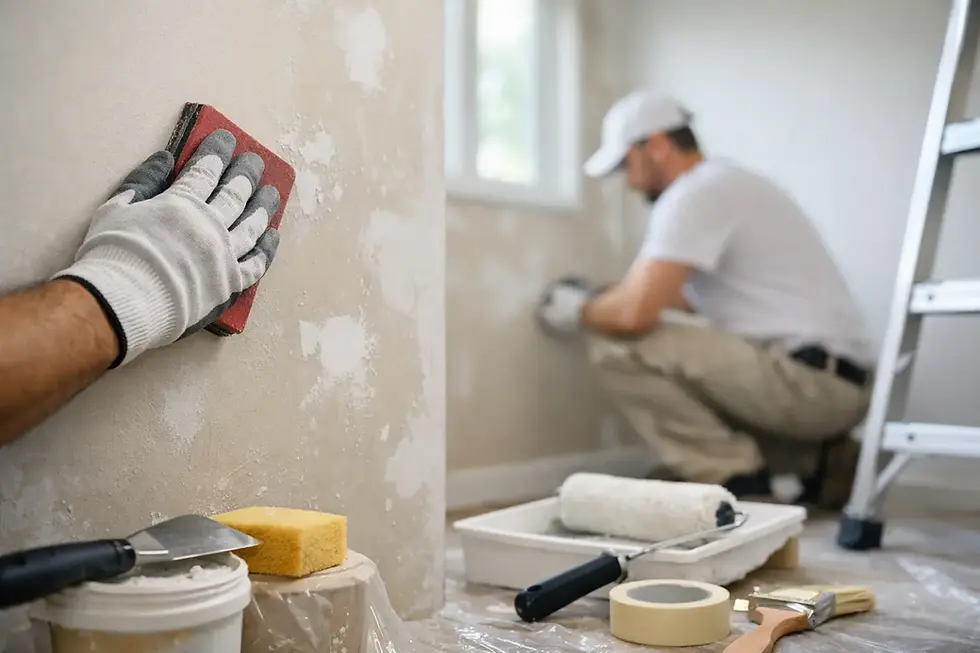
That is why preparation is not a side issue. Cleaning, repairing, sanding, sealing and stabilising the substrate are part of the finish, not separate from it. Where there is moisture damage, flaking coatings or movement in the wall, those issues need to be addressed properly before decorative work begins.
This is especially relevant in Melbourne properties where age, previous renovations and seasonal changes can all influence wall condition. A good result comes from matching the finish to the surface and preparing that surface carefully, not rushing to the decorative layer.
What a professional result should look like
A quality decorative finish looks intentional, consistent and suited to the room. It should not appear forced or overly busy. Variation, where it is part of the style, should feel controlled rather than random. Edges should be clean, transitions neat, and the finish should sit comfortably with the rest of the interior.
Professional application also means practical site management. Decorative work can involve multiple stages, drying times and careful protection of surrounding areas. In occupied homes and active workplaces, cleanliness and planning matter just as much as workmanship. Respect for the property is part of the service.
For many clients, reassurance comes from knowing the team handling the work understands both the decorative side and the painting fundamentals underneath it. Painting and Decorating Experts takes that approach seriously - the visual result matters, but so does reliability, tidy work practices and completing the job with minimal disruption.
When decorative walls are worth it
Decorative finishes are worth considering when plain paint feels too flat, when a room needs a focal point, or when the interior calls for more depth than colour alone can provide. They are also valuable when you want a finish that helps a home, office or venue feel more considered and complete.
They are not the right solution for every wall in every property. Sometimes a well-selected standard paint system is the better choice, especially in heavily used areas where simple maintenance is the priority. But in the right location, a decorative finish can lift the entire space and make the room feel more finished, more individual and more in tune with the building.
The best starting point is usually not choosing the most eye-catching option. It is working out what the room needs - softness, texture, polish, warmth or impact - and selecting a finish that delivers that result without creating maintenance issues later. Done properly, the wall does more than look good on day one. It continues to add value to the space every time you walk in.