
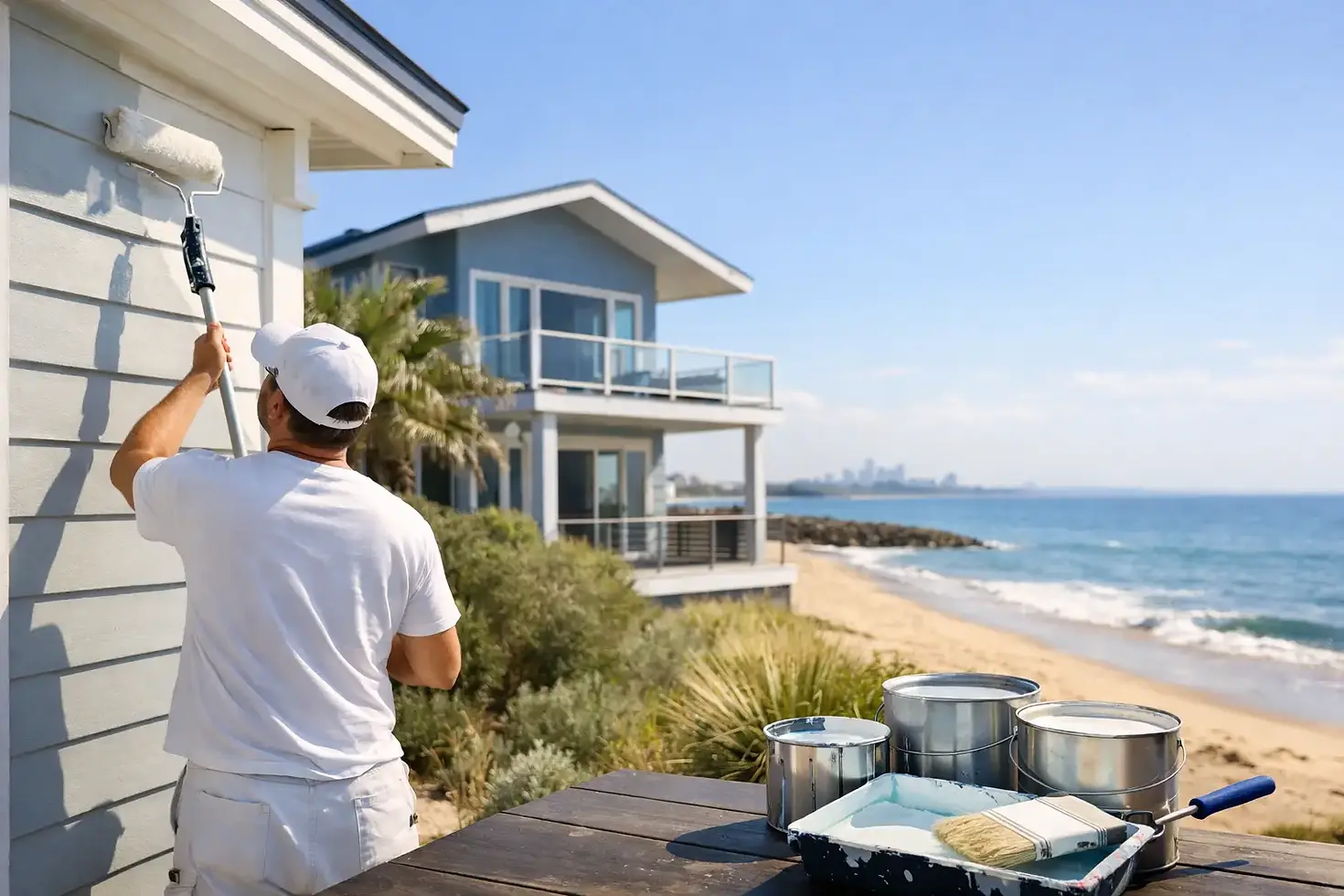
Best Paints for Coastal Homes in Melbourne

A home near the bay can look immaculate one season and begin showing early wear the next. Salt-laden air, strong UV exposure, wind-driven rain and damp morning conditions place far greater pressure on exterior coatings than many inland properties experience. Choosing the best paints for coastal homes is therefore less about finding a single ‘best’ tin of paint and more about selecting the right coating system, finish and preparation method for each surface.
For homes across Melbourne’s Bayside suburbs, a durable result starts with understanding where the building is exposed, what it is made from and how well existing paint is holding. The right system protects the property’s appearance while reducing the likelihood of peeling, blistering, chalking and premature timber deterioration.
What coastal conditions do to exterior paint
Coastal air carries microscopic salt particles that settle on walls, windows, roofs, gutters and timber trim. When moisture is added, those deposits can hold water against painted surfaces and contribute to coating breakdown. This is especially noticeable on elevations facing the water or prevailing weather, but sheltered corners and under-eave areas can also suffer where ventilation is poor.
Sun is another major factor. UV exposure gradually degrades the binders that hold paint together, causing colour fading and a powdery surface known as chalking. Dark colours absorb more heat, which can increase movement in timber and other substrates. That movement places stress on the paint film, particularly around joints, exposed edges and old repair areas.
The challenge is rarely one issue alone. A coastal property may deal with salt, rain, sunshine, condensation and wind in the same week. That is why professional painting decisions need to consider the complete exposure level rather than simply matching a new colour to the old one.
The best paints for coastal homes are matched to the surface
Exterior paint systems are designed for different materials, and using the wrong type can compromise even careful application. The coating must adhere properly, allow the surface to perform as intended and provide suitable protection against weather.
Render, masonry and brick
Masonry surfaces need a breathable exterior coating system that can cope with minor movement while resisting moisture penetration. Hairline cracks should be repaired before painting, as paint alone is not a long-term structural crack repair. On older rendered homes, the condition of the existing finish matters just as much as the new coating. Loose, powdery or poorly bonded paint needs to be removed or stabilised before repainting.
A low-sheen or matt exterior finish is often chosen for broad rendered walls because it provides an even appearance and is less likely to highlight minor surface imperfections. However, the right finish still depends on the wall’s condition, architectural style and cleaning requirements.
Timber weatherboards, fascias and trim
Timber is common in established Bayside homes and needs particular attention near the coast. It expands and contracts with changing moisture levels, and exposed boards can deteriorate quickly if end grain, joins and gaps are left unprotected.
A flexible exterior coating system is generally appropriate for timber because it needs to move with the substrate. Thorough preparation is critical: failed paint must be removed, bare timber sealed where needed, gaps addressed with a paintable flexible filler and vulnerable edges properly coated. Fascias, window frames and decorative timber details often require more frequent inspection because they receive direct weather exposure.
Metalwork, gates and railings
Metal surfaces can corrode rapidly in salt air, particularly where paint has been scratched or worn through. The best approach is not simply to coat over rust. Corrosion needs to be removed or treated appropriately, the surface cleaned and a suitable primer applied before the finishing coats.
Metal paint systems should be selected for the specific substrate, whether it is steel, galvanised metal or aluminium. Compatibility matters. Applying a coating without the correct preparation or primer can lead to adhesion failure, sometimes within a relatively short period.
Fibre cement and composite cladding
Fibre cement and modern cladding products are generally durable, but their joints, fasteners and cut edges still require careful treatment. These surfaces often benefit from coatings that provide strong adhesion, weather resistance and some flexibility. Any signs of swelling, cracking, failed caulking or water entry should be addressed before painting begins.
Finish matters as much as paint type
Sheen level affects both appearance and practical performance. There is no single answer for every coastal home.
Low-sheen finishes are popular for external walls because they provide a refined look and can help disguise small undulations. Semi-gloss finishes are commonly used on trim, doors and window frames where a harder, more washable surface is useful. Gloss can offer a crisp traditional appearance but will highlight surface defects and requires very thorough preparation.
For coastal properties, consider the practical side of colour and sheen as well. Very dark colours can show salt residue and absorb heat, while very pale colours may reveal marks or mildew in shaded locations. A balanced exterior palette, paired with finishes suited to each surface, is often easier to maintain over time.
Preparation is the real protection layer
Even high-grade exterior paint cannot perform properly over contaminated or unstable surfaces. In coastal areas, cleaning is not a cosmetic step. It is essential preparation.
Before painting, exterior surfaces should be washed to remove salt, dirt, chalking, mould and airborne pollutants. The required method depends on the substrate and its condition. Excessively aggressive washing can damage old render, force water into openings or lift loose paint, so it should be handled with care.
Once clean and dry, the painter should assess the existing coating, check for failed sealants, repair damaged areas and sand surfaces where needed for adhesion. Bare spots must receive the appropriate primer. This is particularly important on timber and metal, where missed preparation can allow moisture to get behind the finish.
Weather timing also matters. Exterior paint should not be applied when rain, heavy dew, strong wind or unsuitable temperatures are likely to interfere with drying and curing. A well-organised painting project allows for these conditions rather than rushing coatings onto a surface that is not ready.
Give exposed elevations extra attention
Not every side of a coastal home weathers at the same rate. The wall facing prevailing winds, an upper-storey balcony, a front fence with little shelter or a western-facing façade may need a more defensive maintenance plan than protected areas under deep eaves.
This does not necessarily mean every surface requires a different paint system. It means the painter should recognise the higher-risk zones and prepare them accordingly. Extra care around window sills, parapets, balcony rails, roofline timber, exterior doors and junctions can make a substantial difference to the lifespan of the work.
Properties close to the foreshore may also benefit from regular rinsing of painted surfaces to remove salt deposits between repainting cycles. This simple maintenance habit is especially helpful for metalwork, glass surrounds, balustrades and exposed joinery.
Signs your coastal paintwork needs attention
Small defects are easier to address before they spread. Homeowners and property managers should look for peeling paint, fine cracking, bubbling, fading, chalky residue, rust stains, mould growth and open gaps around windows or trim. These can indicate that water, salt or UV exposure is beginning to compromise the coating system.
Pay attention after severe weather. A storm may not cause obvious damage, but it can expose weak points in sealants, timber joints and existing paint films. Early maintenance protects the substrate beneath, which is often more important than the visible finish itself.
A professional assessment avoids guesswork
The best results come from treating coastal painting as a protective maintenance task, not just a colour update. An experienced painter will assess the substrate, identify coating failures, recommend suitable finishes and plan the work around local weather conditions. For occupied homes and active commercial sites, careful scheduling and clean site practices are equally important.
If your exterior is showing the effects of salt air or changing weather, start with a close inspection rather than choosing a colour card. The right preparation and coating system can keep a coastal property looking cared for through the seasons.


